 onkommon.com

Local therapy
Thermal ablation (RFA, microwave, cryo)
Destroying a small tumour through a needle, using heat or cold, without an operation.
Delivered at a partner unit
What it is
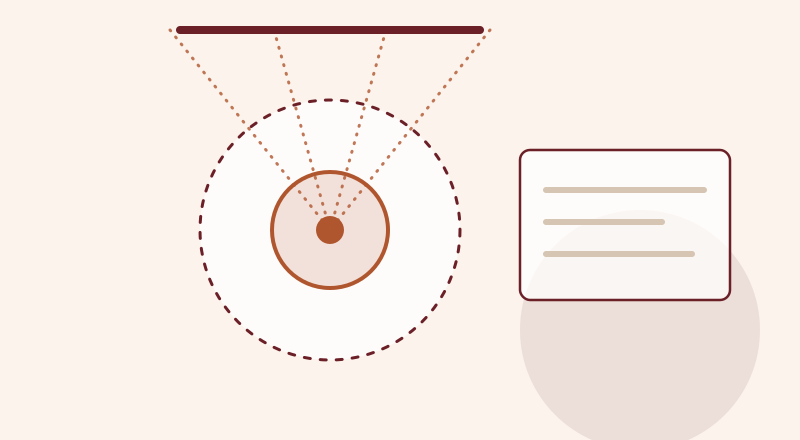
A needle electrode is placed into the tumour under CT or ultrasound guidance and the tissue is destroyed by heat (radiofrequency or microwave) or by freezing (cryoablation). The patient usually goes home the same day or the next.
For small liver, kidney and lung tumours in selected patients, ablation can achieve local control comparable to surgery with a fraction of the recovery. Selection is everything: size, position, and proximity to structures that must not be injured.
When it is used
- Small liver tumours, particularly with cirrhosis
- Small renal tumours where surgery is high-risk
- Limited lung metastases
- A painful bone lesion
- When an operation is not survivable but local control is still worth having
How the decision is made
- Whether the lesion is genuinely ablatable, size, number and margin to critical structures.
- Whether ablation, surgery or radiotherapy gives the better local control in this specific position.
- What happens if it recurs at the same site, and whether that option is preserved.
Decided here at the board; performed at an interventional radiology partner unit.
Who does what
What we handle, and what happens elsewhere
KPCIRC handles
- Review of imaging for suitability
- A board decision comparing ablation, surgery and SBRT
- Referral to a named interventionalist with the case summary
- Follow-up imaging schedule and interpretation
Performed and billed elsewhere
- The ablation procedure itself
- Same-day anaesthesia and recovery

- Post-ablation fever and pain for a few days is expected; persistent fever, breathlessness or worsening pain is not, tell us.
Questions to ask your own doctor
Take these with you. They work whether or not you are treated here.
- Is my tumour in a position where this can work?
- How does this compare with surgery for me?
- How many of these has the operator done?
- How will we know it worked, and when?
Support that goes with it
Where this is used
Cancers this commonly forms part of
Not sure this is the right option for you?
That is exactly what a second opinion is for. Bring what you have, we will tell you what is missing and what the alternatives actually are, in writing.