 onkommon.com

Systemic therapy
Chemotherapy
Drug treatment that acts on rapidly dividing cells throughout the body.
What it is
Chemotherapy uses medicines that interfere with cell division. Because it travels in the bloodstream it reaches disease that has spread beyond the original site, which is why it is used when the concern is not only the visible tumour.
It is given in cycles: a treatment day, then a recovery gap, repeated. The gap is not idle time. It is what lets normal tissue recover, and it is why missing cycles or delaying them is a clinical decision rather than a scheduling one.
When it is used
- Before surgery, to reduce the extent of an operation (neoadjuvant)
- After surgery, where there is a risk of microscopic disease remaining (adjuvant)
- As the main treatment where disease has spread
- Alongside radiotherapy, where the two are given together (concurrent chemoradiation)
- To control symptoms and slow progression, where cure is not the goal
How the decision is made
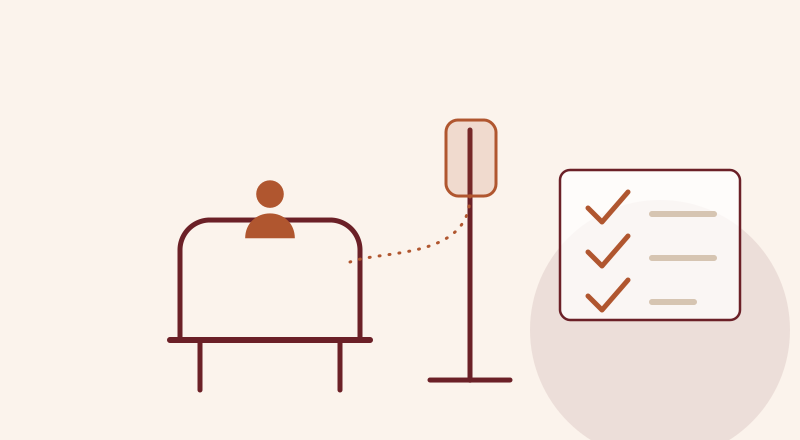
- Which regimen, at what dose, for how many cycles, agreed at the tumour board against your pathology, stage, organ function, age, other conditions and what you want from treatment.
- Whether a cheaper clinically equivalent medicine or biosimilar exists. This is a standing agenda item, not an afterthought.
- Whether molecular testing should change the choice before the first cycle rather than after the third.
Day-care infusion at a partner unit, chosen for proximity to your home wherever clinically reasonable. Oral chemotherapy is taken at home under a written schedule.
Who does what
What we handle, and what happens elsewhere
KPCIRC handles
- The regimen decision, written and signed
- Pre-cycle fitness assessment and dose decisions
- Toxicity review between cycles, and the decision to continue, reduce or interrupt
- Anti-emetic and supportive prescribing
- Nutrition, and the dietitian who makes eating possible when it is not
- Cost planning across the whole course, before cycle one
Performed and billed elsewhere
- Administration of the infusion
- Admission if it is ever needed
- Imaging for response assessment
- The medicines themselves, dispensed by a pharmacy
- A fever during chemotherapy is an emergency. Do not wait, do not take paracetamol and go to bed, go to your nearest emergency department and tell them you are on chemotherapy.
- Also urgent: uncontrolled bleeding, breathlessness, chest pain, persistent vomiting, or a sudden change in alertness.
Questions to ask your own doctor
Take these with you. They work whether or not you are treated here.
- What is this regimen intended to achieve for me specifically?
- How many cycles, and how will we know whether to continue?
- What will the whole course cost, including scans, supportive medicines and travel?
- Is there a clinically equivalent, cheaper medicine?
- What side effects should make me phone you, and what should make me go to hospital?
- What happens to my fertility, and should I see someone about that first?
Support that goes with it
Where this is used
Cancers this commonly forms part of
Breast cancer
Including hormone-receptor positive, HER2-positive and triple-negative disease
Lung & thoracic cancer
Non-small cell and small cell lung cancer, mesothelioma, thymic tumours
Colorectal cancer
Colon and rectal cancer, bowel cancer
Stomach cancer
Gastric cancer
Ovarian cancer
Epithelial ovarian, fallopian tube and primary peritoneal cancer
Lymphoma
Hodgkin and non-Hodgkin lymphoma
Leukaemia
Acute and chronic leukaemias. ALL, AML, CLL, CML
Not sure this is the right option for you?
That is exactly what a second opinion is for. Bring what you have, we will tell you what is missing and what the alternatives actually are, in writing.