 onkommon.com
Common cancers · free patient guide
Breast cancer
Including hormone-receptor positive, HER2-positive and triple-negative disease
Breast cancer clinic
What it is
Breast cancer is not one disease. It is several, separated by what drives them: hormone receptors, HER2 status, and how the cells look under a microscope. That biology decides the treatment far more than the size of the lump does.
Most breast lumps are not cancer. That is a genuine reassurance and also the reason lumps get ignored, the only way to know is to have it examined.
Breast cancer is the most common cancer in Indian women, and is frequently diagnosed at a later stage here than in countries with organised screening, usually because a lump was noticed and not acted on.
Warning signs worth acting on
- Any new discrete lump in the breast or armpit
- A change in the shape or size of one breast
- Skin dimpling, puckering, or an orange-peel texture
- Nipple discharge, especially blood-stained, or a nipple that has newly turned inward
- A rash or scaling on the nipple that does not settle
- A strong family history of breast or ovarian cancer, whether or not you have found anything
How it is diagnosed
- Clinical breast examination
- Mammography, ultrasound, or both, depending on your age and breast density
- Core biopsy, a needle sample, not necessarily surgery
- Receptor and HER2 testing on that sample, which determines the treatment options
- Staging imaging where indicated
Receptor status (ER, PR) and HER2 are the foundation and are checked on every case. Where they are borderline or the report is unclear, independent pathology review happens before a multi-year treatment is built on it. Genomic profiling is used in defined situations to inform whether chemotherapy adds enough to justify it. Germline testing is offered where family history or age suggests hereditary risk.
Is it inherited?
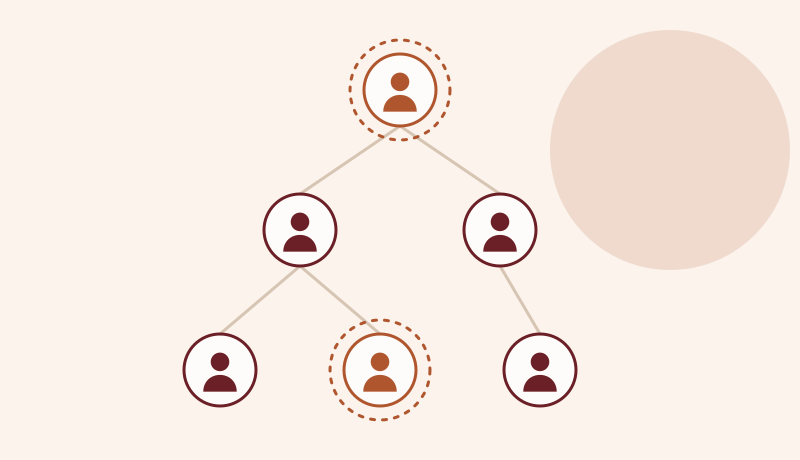
Around one in ten breast cancers carries an inherited component. Where a pathogenic variant is found, the people most affected are often not the patient but the sisters, daughters and cousins who could be screened years earlier. Cascade testing here is a tracked obligation with a named owner.
Genetic counselling & family risk →
Prevention & early detection
Breast awareness matters more than a technique, knowing what is normal for you, so a change is noticed. Screening intervals depend on age and family history, and are worth asking about rather than assuming.
Treatment options
What may form part of a plan
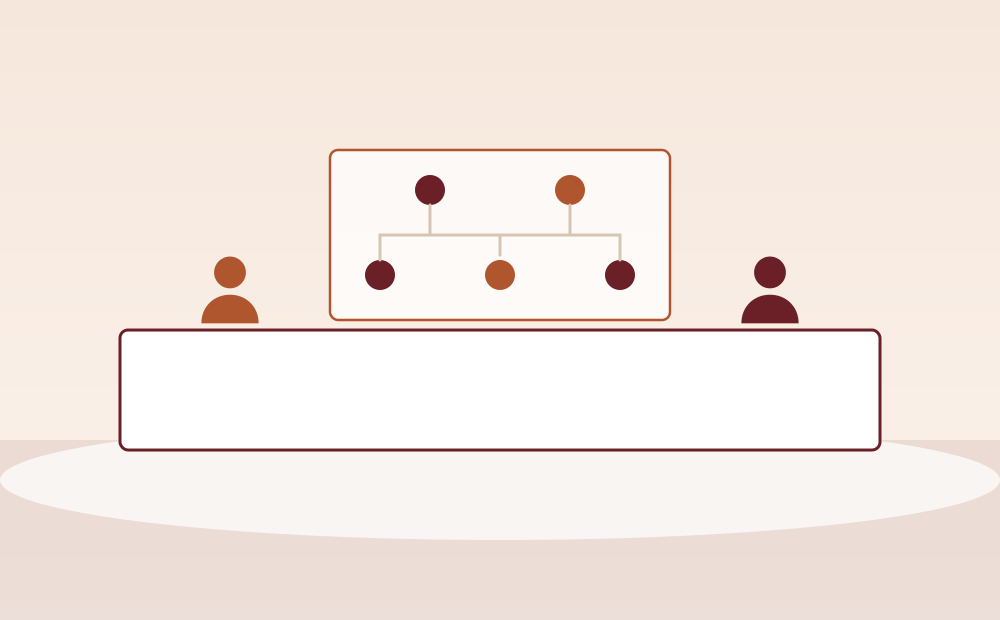
Which of these apply to you depends on your stage, your pathology, your other health and what you want from treatment. That decision belongs at a tumour board, not on a website.
Surgery
Operability assessment and planning here; the operation at the appropriate partner centre.
Chemotherapy
Drug treatment that acts on rapidly dividing cells throughout the body.
Radiotherapy
Targeted radiation to a defined area, planned in millimetres.
Hormone therapy
Treatment that removes or blocks the hormones some cancers depend on.
Targeted therapy
Medicines matched to a specific alteration found in your tumour.
Immunotherapy
Treatment that works on the immune system rather than directly on the tumour.
Conservative management & active surveillance
Sometimes the right decision is to watch carefully and treat nothing yet.
At KPCIRC
The pathway for this disease
- Receptor and HER2 interpretation, and what each implies for the option set
- Hereditary risk triage into genetic counselling, for you and for your relatives
- The fertility conversation before treatment starts, for every patient of reproductive age
- Lymphedema surveillance built into follow-up, rather than waiting for an arm to swell
- Survivorship on endocrine therapy, the years after treatment that most services ignore
Support that matters most here
Take this with you
Questions to ask your own doctor
These work wherever you are treated. Print the page or take a photograph of this list.
- What are my receptor and HER2 results, and what do they mean for my options?
- Do I need chemotherapy, and what does it add in my specific case?
- What are my surgical options, and does the choice affect anything else?
- Should my daughters or sisters be tested?
- What happens to my fertility, and do I need to see someone before we start?
This page is not an emergency service. Severe breathlessness, chest pain, uncontrolled bleeding, a high fever during chemotherapy, or a sudden change in alertness means going to your nearest emergency department now, not reading further.